Resources
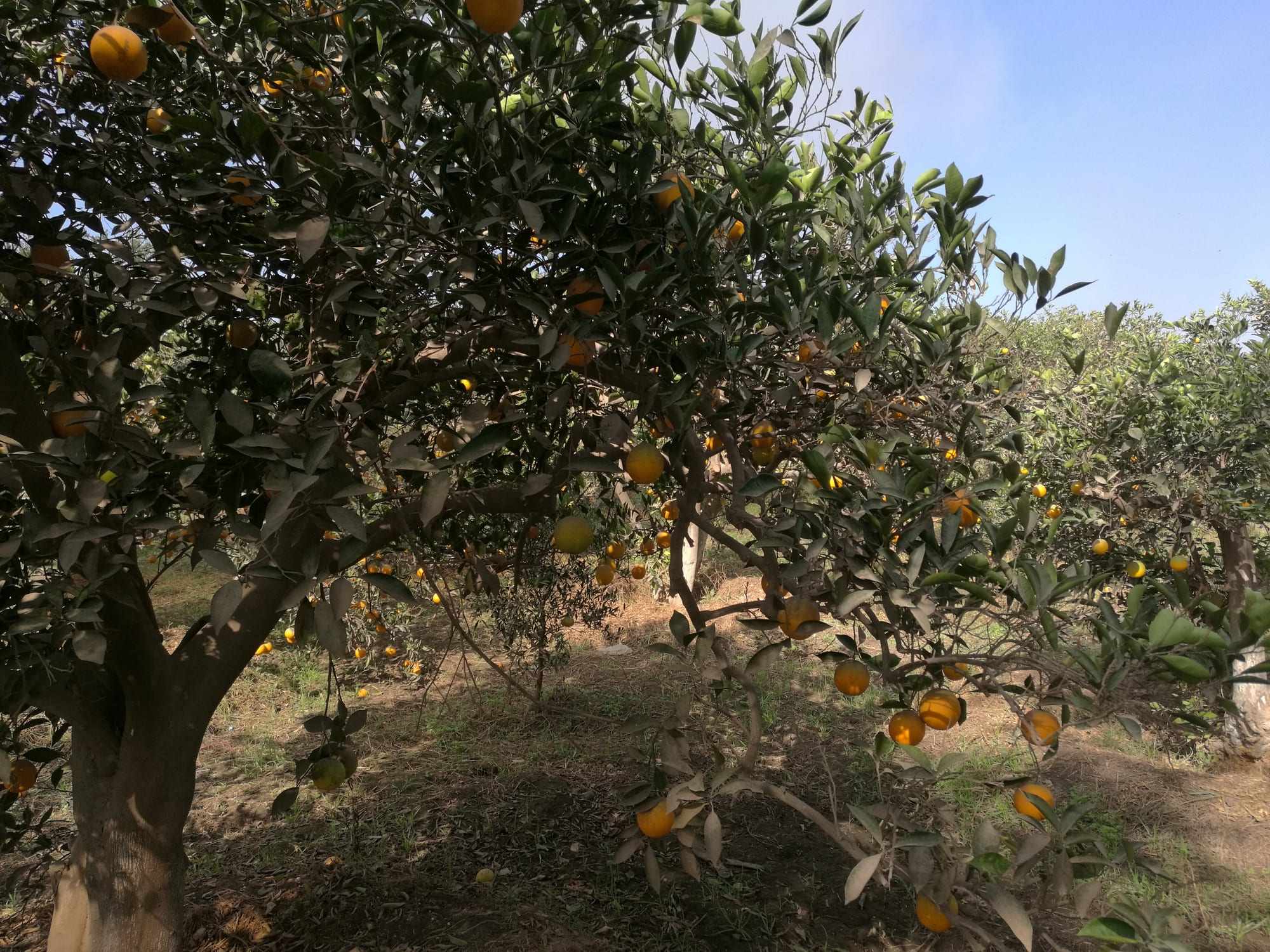
Orange orchard in December,
Official rules, forms and guidance for trading dried herbs from Egypt to the EU. Every link leads to the publishing authority. Each entry says what the document is and when the link was last checked.
EU limits for residues and contaminants
-
EU Pesticides Database: maximum residue levels
Current EU maximum residue levels by pesticide and product; dried herbs, herbal infusions and seed spices each have their own product codes.
-
EU law on pesticide residues. Article 18 makes the maximum residue levels binding and sets a default of 0.01 mg/kg where no specific level exists.
-
Sets the EU residue definition for ethylene oxide, the sum of ethylene oxide and 2-chloroethanol expressed as ethylene oxide, in Annex V to Regulation 396/2005.
-
Commission note on applying MRLs to processed and dried products, relevant where an MRL refers to the fresh herb, such as basil or marjoram.
-
Commission Regulation (EU) 2023/915 on maximum levels for certain contaminants in food
EU maximum levels for contaminants in food; Annex I, point 2.4 sets the pyrrolizidine alkaloid levels for dried herbs and herbal infusions.
-
Commission Regulation (EC) No 2073/2005 on microbiological criteria for foodstuffs
EU microbiological criteria for food. Annex I sets Salmonella criteria for sprouted seeds, pre-cut fruit and vegetables and unpasteurised juices, none for dried herbs.
EU import controls and plant health
-
Regulation (EC) No 178/2002 laying down the general principles and requirements of food law
The EU General Food Law: imported food must meet EU food law (Article 11), unsafe food may not be marketed (Article 14), traceability (Article 18).
-
Regulation (EU) 2017/625 on official controls and other official activities
Framework for official food controls in the EU, including checks at border control posts on goods entering from outside the EU.
-
Lists foods from named countries under increased border checks or special import conditions; the Commission reviews these lists at least every six months.
-
TRACES (Trade Control and Expert System)
Commission page on TRACES, the online system in which EU importers file the common health entry document (CHED) when goods need border checks.
-
RASFF Window: notifications of the EU Rapid Alert System for Food and Feed
Public search of notifications in the EU Rapid Alert System for Food and Feed, by product category and country of origin.
-
Commission Implementing Regulation (EU) 2019/2072 on protective measures against pests of plants
EU plant-health import rules. Annex XI lists the plants and plant products that need a plant-health document at EU entry.
-
ISPM 15: Regulation of wood packaging material in international trade
International standard for wooden pallets, crates and dunnage in trade: the measures they must undergo and the mark they must carry.
Customs, tariffs and origin
-
TARIC: integrated tariff of the European Union
Look up EU duty rates, tariff preferences and import measures by CN code and country of origin.
-
Commission portal on tariffs, rules of origin, import procedures and product requirements, searchable by product code, origin and destination country.
-
EU–Egypt Association Agreement (Access2Markets)
Commission summary of the EU–Egypt Association Agreement, in force since 2004, with a separate agricultural products agreement since 1 June 2010, and its origin rules.
-
Transitional rules of origin for EU–Egypt trade; Annex IV holds the EUR.1 specimen and Annex III the text of the origin declaration.
-
The revised PEM Convention rules of origin, which the EU and Egypt have also applied since 11 March 2025, alongside the transitional rules.
-
The Pan-Euro-Mediterranean cumulation and the PEM Convention
Commission page on the PEM rules of origin: which rule set applies between which partners, from when, and the current cumulation matrix.
-
Proof of origin: EUR.1 form and origin declarations
Commission page on proofs of preferential origin: the EUR.1 form, origin declarations made out by exporters, and the technical requirements for the form.
-
Guidance: transitional PEM rules of origin
Commission guidance on the transitional PEM rules of origin, including the choice between rule sets and the proofs of origin.
-
Guidance: revised PEM rules of origin
Commission guidance on the revised PEM rules of origin of 2023, including how proofs of origin are issued and verified.
-
Guidance document on customs formalities on entry and import into the European Union
Commission guidance on EU entry and import formalities: entry summary declaration, presentation of goods, temporary storage and the customs declaration.
-
GOEIC: rules for origin documents, including EUR.1 for the EU (Arabic)
GOEIC page on the origin documents it issues; for EU shipments it issues EUR.1 with “According to Transitional Rules” in box 7.
-
GOEIC: conditions and procedure for issuing origin documents (Arabic)
GOEIC service sheet for issuing origin documents: online steps on the GOEIC portal, the required e-services account, application form 8 bis and exporter declaration.
-
GOEIC: approved exporter system (Arabic)
GOEIC presentation on approved exporter status: the exporter makes out the origin declaration on the invoice or another commercial document, quoting its approved exporter code.
Trade standards for herbs and spices
-
Minimum quality requirements of the European spice industry for herbs and spices: extraneous matter, moisture, ash, volatile oil and contaminants.
-
Waren-Verein der Hamburger Börse: Conditions of Business
Hamburg trade terms for dried produce, herbs and spices: purchase after sample approval, inspection costs, payment against documents, surveys, arbitration.
-
ESA-recommended dehydration factors for assessing pesticide residues in dried herbs and spices against EU limits set for the fresh product.
-
Compendium of Guidelines for Herbal and Fruit Infusions
Trade guidelines for herbal and fruit infusions sold in the EU: product categories, legal requirements and quality criteria.
-
THIE recommended microbiological specifications for herbal infusions
Trade specifications for dry herbal infusion raw materials: limits for plate count, yeasts, moulds and E. coli, and Salmonella absent in 125 g.
-
Field, harvest and handling measures to keep plants that contain pyrrolizidine alkaloids out of raw materials for herbal infusions.
-
Interpretation of Regulation (EU) 2023/915 for herbal infusions and tea
How the herbal infusion industry applies the EU contaminants regulation to raw materials for infusions and to finished herbal infusions.
-
Practicable approach to drying factors for herbal and fruit infusion raw materials
Article by THIE on drying factors for checking dried infusion raw materials against EU MRLs set for the fresh plant.
-
THIE allocation list: herbal infusion plants by EU MRL product category
Assigns herbal infusion plants and plant parts to their product category and group under the EU pesticide residue rules.
-
THIE inventory list of herbals considered as food
Plants that the European herbal infusion trade uses as food, with the plant parts used; first compiled in 2000.
-
German Food Code guidelines for spices and other seasoning products (Leitsätze, German only)
German trade-practice guidelines for spices and culinary herbs, including basil, fennel and marjoram, with a maximum acid-insoluble ash for each spice.
-
German Food Code guidelines for tea, herbal and fruit tea (Leitsätze, German only)
German trade-practice guidelines for herbal teas, with entries for chamomile flowers, fennel fruits and calendula flowers.
-
Codex Standard for Dried Thyme (CXS 328-2017)
Codex standard for dried thyme: maxima for moisture, total ash and acid-insoluble ash, a minimum volatile-oil content and tolerances for defects.
-
Codex Standard for Peanuts (CXS 200-1995)
Codex standard for peanuts: moisture at most 10 % in pod, 9 % for kernels; mouldy or rancid kernels 0.2 %; extraneous matter 0.5 %.
-
UNECE Standard FFV-25 concerning the marketing and commercial quality control of onions
International marketing standard for dry onions: minimum requirements, classes, sizing by diameter, tolerances, presentation and marking.
-
CBI: What requirements must herbs and spices meet to be allowed on the European market?
The Dutch export-promotion agency's overview of legal requirements, buyer requirements and niche requirements for herbs and spices in Europe.
-
CBI: Entering the European market for dried thyme
Requirements, quality parameters, packaging, channels, competition and prices for dried thyme in Europe; Egypt supplies about half of extra-EU imports.
-
CBI: Entering the European market for groundnuts
Aflatoxin limits, the EU import-control regime by origin, quality parameters, packaging, channels, competition and prices for groundnuts in Europe.
Egyptian authorities and export procedures
-
GOEIC: registration and re-registration in the exporters register (Arabic)
Conditions, documents and steps for registering a company in Egypt's exporters register under Law 118 of 1975 and Decree 770 of 2005.
-
GOEIC: exporters register application forms (Arabic)
Form set for new registration in the exporters register: application, declarations, undertakings and authorisation of a representative.
-
Ministerial Decree No. 770 of 2005: executive regulation of the Import and Export Law (Arabic)
Rules under Egypt's Import and Export Law No. 118 of 1975, including the conditions and documents for the exporters register.
-
NFSA export control department (Arabic)
NFSA alone inspects and samples food for export; customs relies on its decision, under Law 1 of 2017 and its executive regulation.
-
NFSA: registration of suppliers, packing centres and drying yards (Arabic)
How suppliers, packing centres, packing stations and drying yards register with NFSA and enter its approved list after an unannounced visit.
-
NFSA Board Decision No. 1 of 2020 on the fitness document for food exports (Arabic)
Binding NFSA rules for the document stating that an exported food consignment meets the importing country's requirements: application, checks, reissue and cancellation.
-
CAPQ export conditions by destination and product
Search of Egypt's plant-quarantine export conditions by destination and product; each result also states the general conditions for every export consignment.
-
CAPQ online registration of exporting companies (Arabic)
Online form to register an exporting company with CAPQ: names, address, tax and commercial register numbers, activities and attachments.
-
Egyptian Customs Authority: customs declaration requirements (Arabic)
Customs declarations are filed on Nafeza; exports need the detailed commercial invoice, the competent control body's approval and the shipping order.
-
Egyptian Customs Authority: dealers register (Arabic)
Registration with Egyptian customs before consignments are cleared; exporters need the tax card, exporters register entry, VAT registration or Form 8 and commercial register.
-
Customs Law No. 207 of 2020 (English version)
Egypt's customs law in the English version published by the Egyptian Customs Authority; later amendments appear in the Arabic consolidated text.
-
Nafeza, Egypt's national single window for foreign trade
Egypt's national platform for foreign trade, through which customs declarations, including the electronic export declaration, are filed.
-
Nafeza: guide to creating and activating an account (Arabic)
Step-by-step guide to opening and activating a Nafeza account and upgrading it to a company account.
Laboratories and accreditation
-
EGAC directory of accredited bodies (Arabic)
Search Egypt's accredited laboratories and other bodies by name, reference number or field, with the published accreditation scope of each.
-
EGAC R4G: the use of the EGAC accreditation symbol
EGAC rules for the accreditation symbol on test reports, including how reports must mark results that fall outside the laboratory's accredited scope.
-
ILAC: Egyptian Accreditation Council (EGAC), signatory entry
ILAC entry showing EGAC as an ILAC MRA signatory for testing laboratories since 10 October 2009.
-
EU guidance for pesticide residue laboratories on method validation, quality control and measurement uncertainty, including the default 50% expanded uncertainty.
-
Working document on the summing up of LOQs in case of complex residue definitions (SANCO/12574/2014)
How laboratories report limits of quantification for residue definitions that sum several compounds, as the ethylene oxide definition does.
-
EU sampling rules for official pesticide residue controls: lots, primary and laboratory samples, and minimum sample sizes.
-
EU methods of sampling and analysis for official controls of plant toxins in food, including pyrrolizidine alkaloids.
-
Method notes from the EU reference laboratory for measuring ethylene oxide and 2-chloroethanol by GC-MS/MS, developed on sesame seeds.
-
EU Reference Laboratories for residues of pesticides
Portal of the EU reference laboratories for pesticide residues: analytical methods, validation data and proficiency test reports.